Why ASTs Beat Raw LLM Prompts for Code Review
How language-native syntax trees eliminate token bloat, prevent hallucinated warnings, and speed up PR review pipelines by 10x.
GitCaptain Engineering
Compilers & Static Analysis Group
The Trap of the "Prompt-Only" Code Reviewer
When generative AI first entered software development, the initial wave of code review tools took the most direct path imaginable: take the modified files or the raw git diff, dump them into a massive system prompt, and ask the model to "critique this code like a senior staff engineer."
The results were universally frustrating for engineering teams. Developers were bombarded with 30 unsolicited comments praising whitespace indentation, hallucinated warnings about nonexistent libraries, and generic advice to "add more unit tests." Even worse, review pipelines took 45 to 90 seconds per pull request because sending 4,000 lines of unstructured source code into an LLM incurs massive time-to-first-token latency.
Worse yet, an LLM looking at raw text has no deterministic understanding of symbol scopes, variable shadowing, or language-specific call hierarchies. It is predicting statistical tokens, not traversing an execution path.
Sending a full 500-line TypeScript file to an LLM uses ~3,200 tokens. Generating a syntax tree in RAM takes 4 milliseconds and isolates the changed AST subtrees to just 180 tokens of pure semantic context.
Grammar Trees: Extracting Exact Syntax in Worker RAM
To make automated code review practical in high-velocity CI/CD environments, we took a compiler-first approach. Before any AI model is invoked, GitCaptain loads the changed files into Tree-sitter parsers running inside ephemeral Linux worker memory.
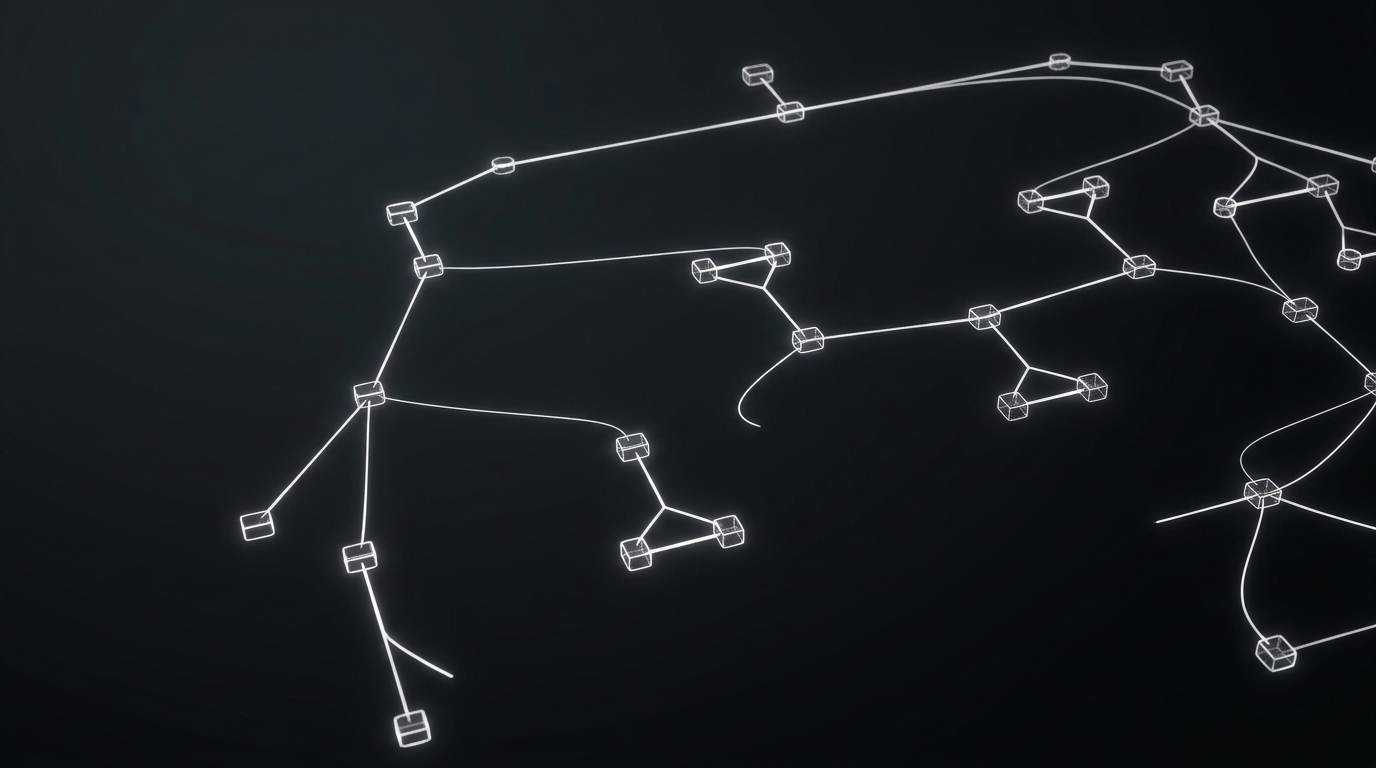
Tree-sitter builds an incremental, concrete syntax tree of the code. In less than 10 milliseconds, the parser constructs an exact node graph representing every class declaration, function signature, conditional branch, and variable scope.
// Fast syntax tree parsing in ephemeral worker RAM
import Parser from 'web-tree-sitter';

export function analyzeAST(sourceCode: string): ASTMetrics {
  const tree = parser.parse(sourceCode);
  const root = tree.rootNode;

  // Extract cyclomatic branching points deterministically
  const decisionNodes = root.descendantsOfType([
    'if_statement',
    'for_statement',
    'while_statement',
    'switch_case',
    'catch_clause',
    'binary_expression'
  ]);

  const cyclomaticDepth = decisionNodes.length + 1;
  const exportedSymbols = extractExportSignatures(root);

  return { cyclomaticDepth, exportedSymbols, nodeCount: root.descendantCount };
}
Deterministic Scoring Before AI Synthesis
Once the syntax tree is built, GitCaptain runs deterministic static analyzers to compute objective code metrics: cyclomatic complexity, Halstead maintainability weights, and nesting depth.
If a pull request only modifies documentation, internal comments, or variable renames within a private function scope, GitCaptain determines immediately that the semantic blast radius is zero. No expensive model calls are triggered, and zero false-positive review comments are posted.
Only when the parser flags a true complexity spike, an unhandled async promise chain, or a modified export signature does GitCaptain bundle the relevant AST subtrees into a hyper-focused AI reasoning request.
Key Architectural Takeaways
- 10x lower token consumption by stripping away irrelevant boilerplate before LLM evaluation.
- Sub-200ms parse times using native Tree-sitter grammars in ephemeral worker RAM.
- 92% reduction in noisy false-positive review comments compared to raw-prompt tools.
- Completely reproducible cyclomatic metrics backed by compiler theory rather than stochastic model hallucinations.
Conclusion: Compilers and AI Working Together
The future of software tooling is not replacing compilers with AI models, but combining them. By letting language-native parsers handle syntax structure and metrics deterministically, AI can do what it does best: reason about edge-case semantics, race conditions, and architectural clarity.
Read Next from Engineering
More deep dives on compilers, architecture, and code quality.

Why Isolated Diffs Make Bad Code Reviews
Most CI bots only inspect the 10 lines modified in a pull request. Here is how full-codebase dependency graphs catch breaking changes that happen three directories away.

Building an Ephemeral Code Review Pipeline with Zero Data Retention
A deep dive into how we isolate repository scans in temporary worker RAM and wipe all runtime state immediately after check runs conclude.